Betting Exchange Boxing: Back and Lay Odds on Betfair
 Available in US
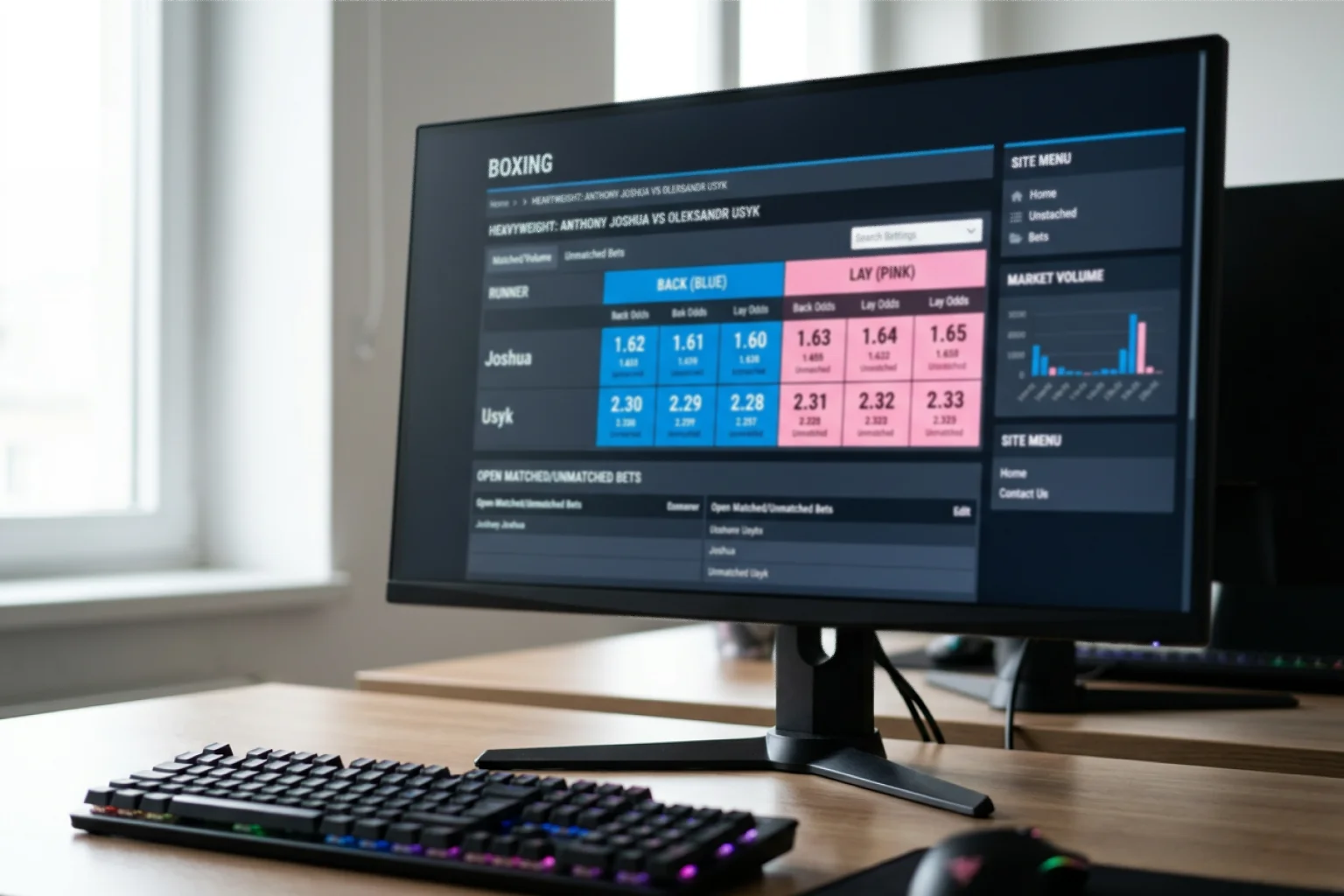
The first time I laid a fighter on a betting exchange, I felt like I had unlocked a secret level of sports betting. Instead of simply backing outcomes, I was suddenly acting as the bookmaker, accepting other bettors’ wagers and profiting when their picks lost. This capability fundamentally changes how you can approach boxing markets, though it requires understanding mechanics that differ substantially from traditional bookmaker betting.
Betting exchanges like Betfair operate peer-to-peer markets where bettors match against each other rather than against a bookmaker. The exchange takes a commission on winning bets but does not set odds or hold positions. This structure creates opportunities unavailable through traditional bookmakers: laying selections to profit when they lose, trading positions as odds move, and often accessing better prices than bookmaker margins permit.
Boxing represents an interesting exchange market because major fights attract significant liquidity while the sport’s volatility creates trading opportunities throughout cards. Understanding how to navigate exchange boxing opens new strategic dimensions that complement traditional betting approaches.
Betting Exchange vs Bookmaker: Boxing Odds Differences
Traditional bookmakers set odds and accept your bets against their positions. They profit from the margin built into their prices regardless of outcomes, though they manage risk by adjusting odds to balance their books. When you bet with a bookmaker, you accept their price as offered.
Exchanges function as marketplaces where you either accept existing offers or post your own. If you want to back a fighter at 2.50 but the best available price is 2.40, you can request 2.50 and wait for someone to match your request. This flexibility often produces better prices than bookmakers offer, though liquidity limitations sometimes mean your preferred price never gets matched.
Commission structures differ from bookmaker margins. Exchanges charge commission only on net winnings, typically between two and five percent depending on your account status. If you win one hundred pounds and pay five percent commission, you receive ninety-five pounds. Losing bets incur no commission. This structure contrasts with bookmaker margins applied to all prices regardless of outcome.
The bookmaker comparison covers traditional operators, but exchange betting deserves separate consideration because the mechanics and strategies differ so substantially.
Back and Lay Explained
Backing works identically to traditional betting. You stake money on an outcome at specified odds, winning if that outcome occurs and losing your stake if it does not. When you back Fighter A at 3.00, you profit two units for every unit staked if Fighter A wins.
Laying is the inverse. When you lay Fighter A at 3.00, you are accepting someone else’s back bet, profiting if Fighter A loses and paying out if Fighter A wins. Your liability equals the potential winnings of the backer: laying ten pounds at 3.00 means you risk twenty pounds to profit ten. You are effectively betting against the laid selection.
Understanding liability prevents painful surprises. A lay bet’s liability far exceeds your potential profit when odds are long. Laying a ten-to-one shot means risking ten units to profit one unit if they lose. This asymmetry suits laying short-priced selections where liability remains manageable relative to potential profit.
The back-lay spread represents the exchange’s equivalent of a bookmaker’s margin. If you can back at 2.90 and lay at 3.00, the spread is 0.10. Tighter spreads indicate more efficient markets with better value for participants. Boxing spreads vary considerably depending on fight prominence and timing.
Exchange Boxing Strategies
Trading involves backing at one price and laying at another to lock in profit regardless of outcome. If you back a fighter at 4.00 and later lay them at 3.00 for the same stake, you profit no matter who wins. This strategy exploits price movements but requires correctly anticipating directional shifts.
Live trading during fights capitalises on odds movements between rounds. A fighter who loses an early round sees their price drift, creating opportunities to back at improved odds if you believe they will recover. Conversely, laying a fighter who has taken control but might fade locks in profit while retaining upside if the comeback materialises.
Laying heavy favourites offers an alternative to backing underdogs. If you believe a one-to-five favourite carries more upset risk than their price implies, laying them profits when the underdog wins without requiring you to correctly identify which underdog. The liability management challenge remains, but the strategic logic can be sound.
Market making involves simultaneously posting back and lay orders at different prices, profiting from the spread when both get matched. This advanced strategy requires significant capital, tolerance for unmatched positions, and deep understanding of fair value. Few recreational bettors engage in systematic market making, but understanding the concept illuminates how exchange liquidity develops.
When Exchanges Make Sense for Boxing
Price comparison should become automatic before placing any significant boxing bet. Check exchange prices against bookmaker offerings and bet wherever value appears. Sometimes bookmakers offer better prices, particularly during promotional periods. Sometimes exchanges offer substantially better odds, especially for positions bookmakers want to discourage.
The lay function suits bettors with strong negative views. If you believe a fighter is overrated but are not confident in backing their specific opponent, laying captures your view without requiring identification of the winning alternative. This flexibility proves particularly valuable in multi-fighter tournaments or situations where any of several opponents might prevail.
Live trading during fights rewards those who can read action accurately in real time. Boxing’s round structure creates natural trading windows during breaks. If your assessment of how a fight is progressing diverges from how the market is reacting, opportunities exist to capitalise on that disagreement.
Building exchange skills expands your overall betting capability. Even if most of your boxing betting occurs through traditional bookmakers, understanding exchange mechanics helps you recognise market inefficiencies and appreciate how professional money shapes odds across all platforms. The exchange is both a betting venue and an information source that improves your overall market literacy.
Written by the editors at box bet.