Boxing Betting Strategy: Identifying Value Bets and Bookmaker Edges
 Available in US
I watched a friend lose six months of profits on a single Joshua fight because he “knew” the knockout was coming. He was right about the knockout. Wrong about who would deliver it. That moment crystallised something I had suspected for years: conviction without strategy is just expensive entertainment.
The UK online sports betting market sits at roughly $4.21 billion and projections put it near $5.69 billion by 2029. Growth attracts newcomers, and newcomers mostly lose. Not because boxing is unpredictable — it is, but less so than many sports — but because recreational punters skip the hard work of building a systematic edge. They bet with their hearts, chase losses, and treat bookmakers like slot machines with gloves.
This guide exists because I spent nine years learning what actually moves the needle. Not hunches. Not YouTube highlights. A framework you can apply to any card, any division, any era. The fighters change; the principles do not. If you want a quick tip for Saturday’s main event, you are in the wrong place. If you want to understand why certain bets print money over hundreds of wagers while others slowly bleed your bankroll dry, keep reading. Strategy separates the hobbyist from the profitable bettor, and what follows is the complete foundation for boxing betting in the UK distilled into actionable steps.
Value Betting in Boxing: Identifying Market Inefficiencies
The first wager I ever felt genuinely good about losing taught me more than twenty winning bets combined. I backed a journeyman at 8/1 against a prospect everyone assumed would steamroll him. The journeyman lost in the eighth round — a fair result — but the fight went exactly as I anticipated: competitive early, pressure mounting late. The prospect was good, not dominant. My probability estimate gave the journeyman a 15% chance; the bookmaker’s odds implied barely 11%. That gap was value.
Value betting means finding situations where your assessment of an outcome’s probability exceeds what the bookmaker’s odds suggest. It has nothing to do with picking winners. Let me repeat that because it trips up almost everyone: you can bet on a fighter who loses and still have made the right decision. If you genuinely believe someone has a 20% chance and you get paid at odds implying 10%, mathematics is on your side. Do that enough times and profits follow.
The Value Formula
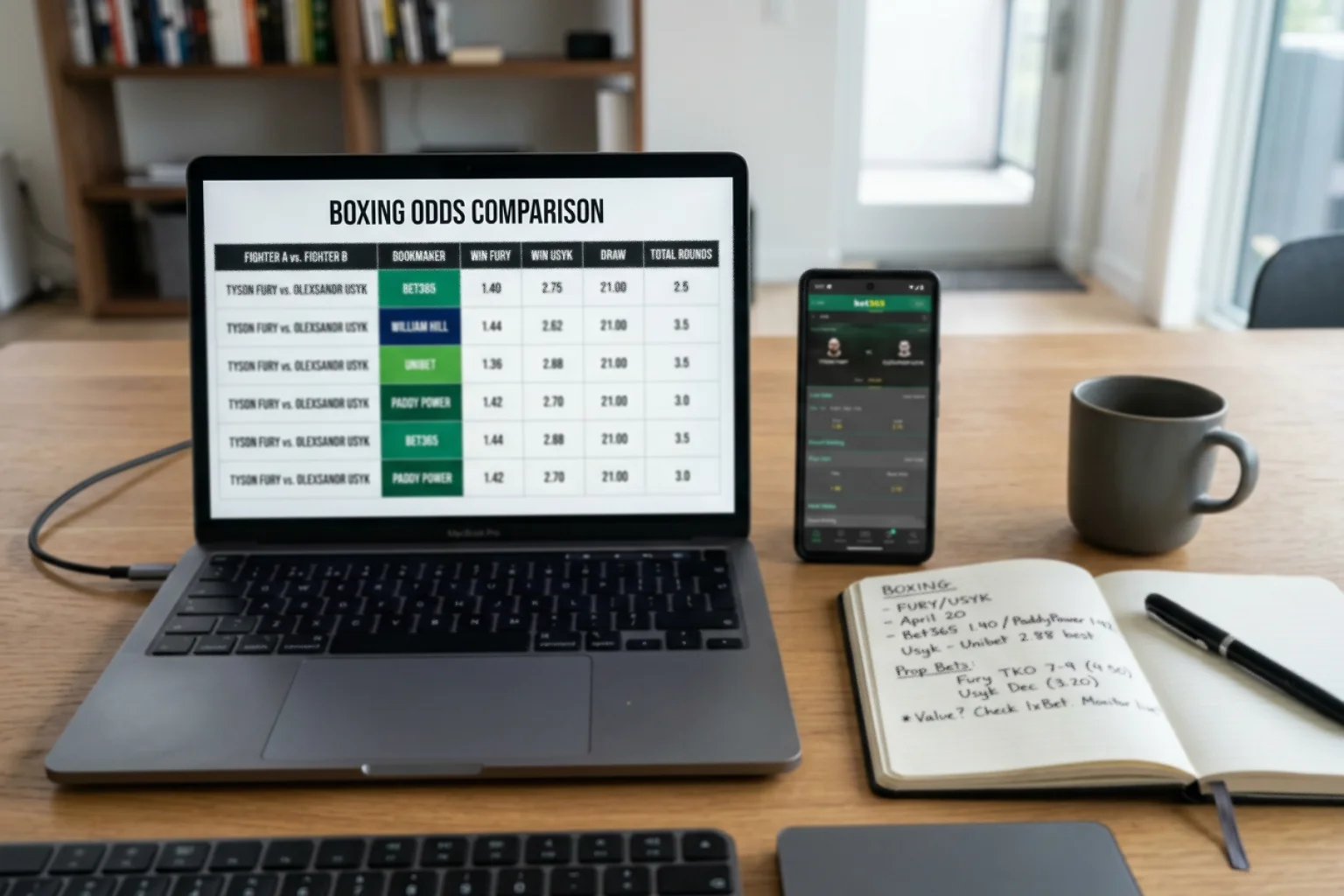
Strip away the jargon and the calculation is simple. Convert the bookmaker’s odds to an implied probability. Compare that number to your own estimate. If your estimate is higher, you have potential value. If it is lower, the bet is not worth placing regardless of how much you like the fighter.
Here is the conversion: for fractional odds, divide the denominator by the sum of numerator and denominator, then multiply by 100. So 4/1 becomes 1 divided by 5, which equals 0.20 or 20%. Decimal odds are even easier — divide 1 by the decimal and multiply by 100. Odds of 5.00 imply a 20% chance.
Expected value comes next. Multiply your estimated probability by the potential return (odds plus stake), subtract the probability of losing multiplied by your stake. A positive number means long-term profit if your probabilities are accurate. A negative number means you are paying a premium the bookmaker will happily pocket.
When Draw Odds Become Value
Draws in boxing are statistically rare and typically priced around 33/1 in decimal format that is 34.00. The implied probability hovers near 2.9%, which sounds about right for most fights. But here is the subtlety that recreational bettors miss: certain matchups push the draw probability significantly higher while the odds barely move.
Two counter-punchers who struggle to impose themselves? The draw chance climbs. A tactical fight where both corners are terrified of the other man’s power? Rounds tick by without clear winners. Veteran fighters who know how to survive without dominating? Scorecards get tight. In these scenarios, 33/1 might represent genuine value even though draws remain uncommon. Spotting these fights requires watching tape, not reading odds boards.
A practical checklist helps filter candidates. First, do both fighters have similar punch output and accuracy? Second, have either been involved in draws or split decisions before? Third, is the scheduled distance long enough for rounds to blur together? Fourth, are the judges assigned known for tight scoring? If you answer yes to three or more, the draw market deserves a closer look.
Analysing Fighter Styles for Betting Advantage
A mate once asked me why I fancied an American knockout artist against a slick Cuban counterpuncher. “He cannot land on air,” I told him. He bet the Cuban anyway. The knockout came in round three. Styles make fights, and styles determine how you should bet on them.
Understanding how two fighting philosophies interact is the foundation of smart market selection. A bout between pressure fighters plays differently than one between two tacticians, and the betting markets that offer value shift accordingly. Get this wrong and you are guessing. Get it right and you start seeing opportunities the public misses.
The Four Fighting Archetypes
Boxers rely on distance, jabs, and ring generalship. They win rounds on points, avoid damage, and frustrate opponents who cannot cut off the ring. Pure boxers tend toward decisions — Pernell Whitaker, Floyd Mayweather, Guillermo Rigondeaux.
Punchers carry fight-ending power but often lack the technical foundation to outpoint elite movers. One clean shot changes everything. Billy Bird holds the record for knockouts in boxing history with 139 across 356 fights. That is a staggering 39% knockout rate over a career spanning decades. Modern power punchers operate similarly: they need fewer chances because each one is potentially final.
Swarmers overwhelm with volume and relentless pressure. They smother technically superior opponents, turning skill fights into wars of attrition. Fitness, chin, and willpower matter more than slick footwork here.
Boxer-punchers combine elements — they can outbox when necessary and hurt you when opportunities arise. They adapt round to round, making them tricky to bet against but also tricky to price correctly.
How Style Influences Method of Victory
When a puncher faces a boxer, the fight often splits into two scenarios: early knockout or late decision. The puncher lands something massive in the first half, or the boxer survives and outpoints him down the stretch. Middle-round stoppages become less likely because the puncher either gets there fast or fades.
Two swarmers produce action-heavy fights where cuts and accumulation stoppages are common. Method of victory markets should skew toward TKO and corner stoppages rather than single-punch knockouts.
Boxer versus boxer matchups lean toward decisions. Rounds stack up without definitive action, and unless there is a massive skill gap, neither man forces the other into uncomfortable exchanges. Over/under rounds markets often favour the over here.
KO Percentage as a Betting Indicator
Knockout percentage tells you how a fighter wins, but context matters. Gervonta Davis leads active champions with a 90.3% knockout rate; Naoya Inoue sits just behind at 90%. Both are legitimate one-punch finishers. But a 70% knockout rate against journeymen inflates differently than 70% against world-level opposition.
Filter knockout percentage by opposition quality. How many stoppages came against fighters with winning records? How many came inside four rounds versus in the championship rounds? A fighter who knocks out faded veterans early looks different from one who breaks down elite resistance over ten rounds. The first might gas against real pressure; the second probably will not.
When two high-knockout fighters meet, the method of victory market explodes with possibilities. When two decision-prone fighters meet, round betting becomes less attractive because precise timing is harder to project. Match the market to the fight profile, not the other way around.
Bankroll Management for Boxing Bettors
I burned through my first betting bankroll in about six weeks. Flush from a couple of winners, I started loading up on “certainties” — heavy favourites I assumed could not lose. One bad night erased months of grinding. The second bankroll lasted two years and grew steadily, not because my picks improved dramatically but because I stopped treating the account like a piggy bank to raid whenever confidence surged.
Bankroll management is not glamorous. It does not make for interesting pub conversation. But it separates people who bet for years from people who quit after one rough patch. Only 0.5% of the UK population is classified as problem gamblers, and the vast majority of those cases involve impulsive behaviour rather than bad analysis. Discipline protects both profits and mental health.
The Unit System
A unit is simply a standardised stake size relative to your total bankroll. Most professional bettors use 1% to 3% as their standard unit. If you have a thousand pounds set aside for betting, one unit equals ten to thirty pounds. This makes every bet proportional, which prevents a single loss from derailing your operation.
Scaling up for stronger convictions is fine within limits. A standard bet might be one unit, a confident play two units, and a maximum bet three units. Going beyond that invites disaster. No fight is a lock. Upsets happen precisely when everyone agrees they will not.
The beauty of units is adaptability. Win consistently and your bankroll grows, which means your unit size grows too. You earn the right to bet more without additional risk. Lose a chunk and your unit shrinks, automatically reducing exposure until you recover.
Flat Betting vs Kelly Criterion
Flat betting means wagering the same amount on every play regardless of edge size. It is simple, eliminates emotional decision-making, and works perfectly well for most recreational bettors. The downside is inefficiency — you bet the same on a coin-flip value spot as you do on a massive edge.
Kelly Criterion optimises stake sizing based on perceived edge. The formula adjusts your bet so that you wager more when your advantage is larger and less when it is thinner. Mathematically, Kelly maximises long-term growth. Practically, it requires accurate probability estimates and strong emotional control. Overestimating your edge means overbetting, which accelerates losses.
Most experienced bettors use fractional Kelly — typically half or quarter Kelly — to buffer against estimation errors. This sacrifices some theoretical growth for much smoother variance. A run of bad results hurts less, and you stay in the game long enough for edges to play out.
Boxing features natural seasonality. Major events cluster around bank holidays and pay-per-view windows. Smaller cards fill gaps but offer fewer betting opportunities. Build your bankroll strategy around this rhythm. Preserve capital during thin periods; deploy it when big fights arrive with deep markets and good information.
When to Back Underdogs vs Favourites
The night Buster Douglas knocked out Mike Tyson, bookmakers learned a lesson they promptly forgot. Casuals still pile onto heavy favourites because losing on a “sure thing” feels acceptable while backing a loser who loses feels stupid. This psychological asymmetry creates systematic mispricing.
Boxing favours upsets more than most sports. One punch changes everything. A cut opens from a clash of heads. A body shot sinks in during round four and the favourite never recovers. Variability is baked into the sport, yet public money consistently underestimates it.
Market Psychology and Favourite Overvaluation
Recreational bettors anchor on recent performances and name recognition. A fighter who just scored a spectacular knockout gets hammered by public money in his next fight even if that opponent stylistically counters him. The knockout replay loops on social media, perception shifts, and odds shorten beyond reasonable levels.
Sharps know this pattern. They wait for the line to move, then pounce on inflated underdogs. The correction often comes late — hours or even minutes before the fight — but by then recreational bettors are locked in. If you can identify when public sentiment is driving odds rather than genuine probability assessment, underdog opportunities emerge.
Favourites below 1/4 deserve special scepticism. At those prices, the implied probability exceeds 80%, meaning the underdog is expected to win roughly one in five times. Do you genuinely believe the underdog has less than a 20% chance? In a sport where a single punch can end matters? Most of the time, the answer is no, which means the favourite is overpriced.
Where to Find Value Underdogs
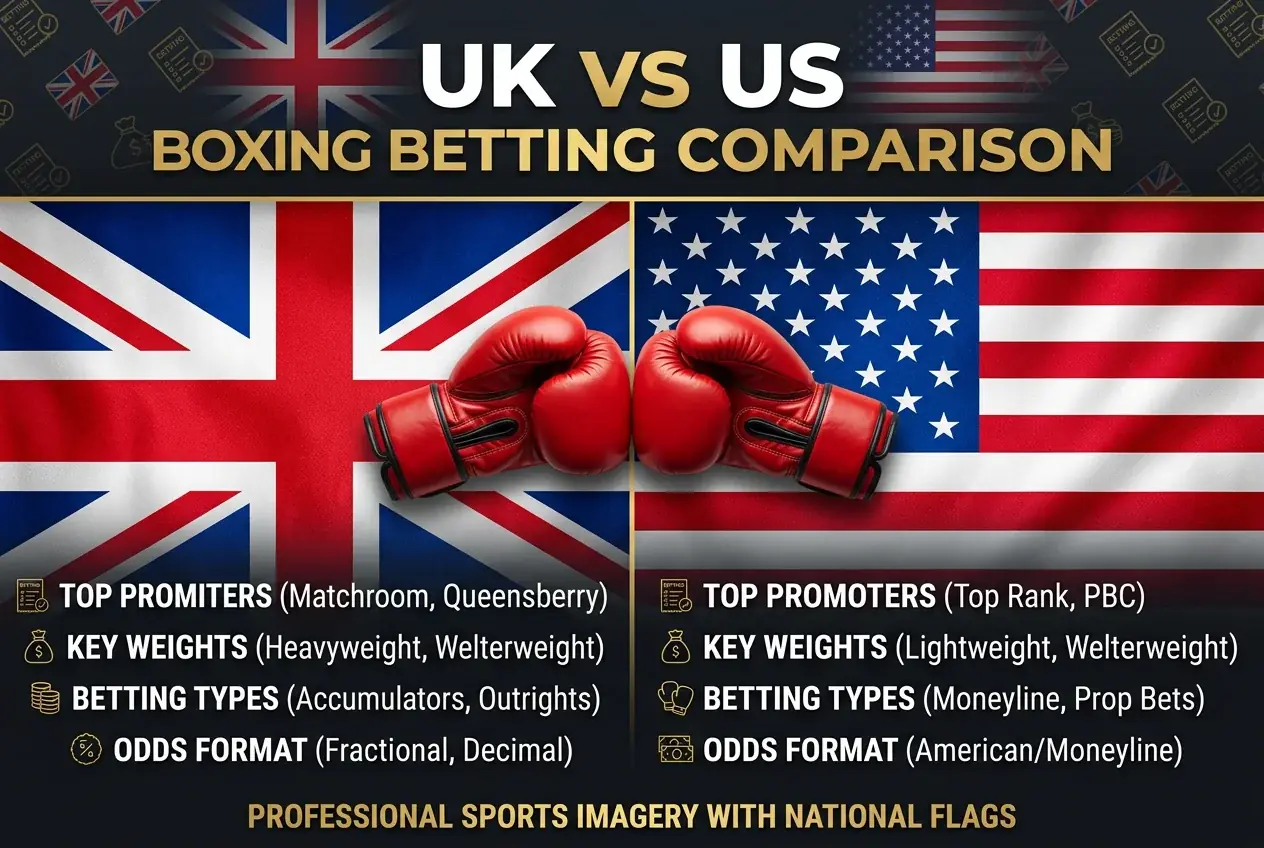
With 17 weight classes and over 85 titles across the major sanctioning bodies, boxing offers enormous variety. Lower-profile cards often feature mispriced fights because bookmakers devote less attention to them. A welterweight bout in Birmingham draws less betting volume than a heavyweight showdown in Las Vegas, which means the market is less efficient.
International underdogs travelling to the UK sometimes carry value. Home advantage is real in boxing — judges, crowd energy, promotional alignment — but it is not decisive. A skilled visitor who struggles to find fair fights at home might be underestimated simply because the British audience does not know him.
Fighters returning from layoffs often drift in the markets. The logic is reasonable: ring rust is real and rust costs rounds. But layoffs also allow injuries to heal and motivation to recharge. A fighter who took two years off to fix a shoulder might return sharper than he was before the injury. The market rarely accounts for this nuance.
Finally, look for style mismatches where the underdog holds a specific advantage. A pressure fighter facing a boxer-puncher with stamina issues might be live even at long odds. The favourite can win if he boxes smart and conserves energy, but the underdog path to victory is clear. These fights offer betting value even when the underdog ultimately loses because the probability of victory exceeds the implied odds.
Pre-Fight Research: Your 10-Point Checklist
Before I place any bet over two units, I run through the same checklist. It takes maybe twenty minutes per fight and has saved me from countless bad wagers. Skipping steps feels efficient until a blindside loss reminds you that preparation is not optional.
Recent form covers the last three to five fights. Wins matter less than performances. Did the fighter look sharp or was he struggling against inferior opposition? Watch the rounds, not just the highlights. A knockout in a fight where the winner was losing beforehand tells a different story than a dominant stoppage.
Layoff time affects different fighters differently. Some need one round to shake off rust; others need an entire fight. Check how a fighter has historically performed after extended breaks. Patterns emerge if you look.
Weight class history matters more than people realise. A fighter moving up might carry power but lack durability at the new weight. A fighter moving down might struggle with the cut and enter the ring drained. Look at how previous weight moves played out.
Trainer changes introduce uncertainty. A new corner means new tactics, which can be positive or negative. Give extra weight to the first fight under new guidance — it often reveals whether the change is working.
Venue and travel factors are subtle but real. A British fighter boxing in Manchester benefits from crowd energy and familiar surroundings. An American fighting in London deals with jet lag, strange beds, and hostile fans. These edges compound.
Sparring reports leak inconsistently, but when they emerge, pay attention. A camp insider suggesting the fighter looked “off” during preparation might be managing expectations or might be telling the truth. Cross-reference with other sources before adjusting.
Injury history shapes durability. A fighter with chronic hand problems might not sustain volume in later rounds. A fighter with a surgically repaired shoulder might hesitate on certain punches. Bodies remember trauma even when tape does not show it.
Motivation and contract status are underrated. A fighter in the last bout of a promotional deal might be looking beyond the current opponent. A mandatory challenger finally getting his title shot might be peaking from sheer hunger. Intangibles move fights.
Referee tendencies influence how fights unfold. Some referees allow clinching and inside work; others break fighters constantly. A swarmer benefits from lax refereeing. A boxer benefits from strict enforcement. Check who is assigned and adjust expectations.
Finally, review any available punch statistics from previous fights. Accuracy percentages, power punch rates, and jab effectiveness all inform style assessments. Numbers do not replace watching tape, but they complement it.
Building Your Boxing Betting Edge
Nine years in, I still lose bets. Every serious bettor does. The difference between grinding a profit and bleeding money comes down to process, not prophecy. Value betting identifies opportunities; style analysis sharpens your probability estimates; bankroll management keeps you solvent during inevitable losing streaks; disciplined research surfaces information the public ignores.
None of this guarantees wins. What it guarantees is that over hundreds of bets, you are operating with mathematics on your side rather than against you. The casual punter bets on fighters. The strategic bettor bets on probabilities. The first approach produces stories. The second produces returns.
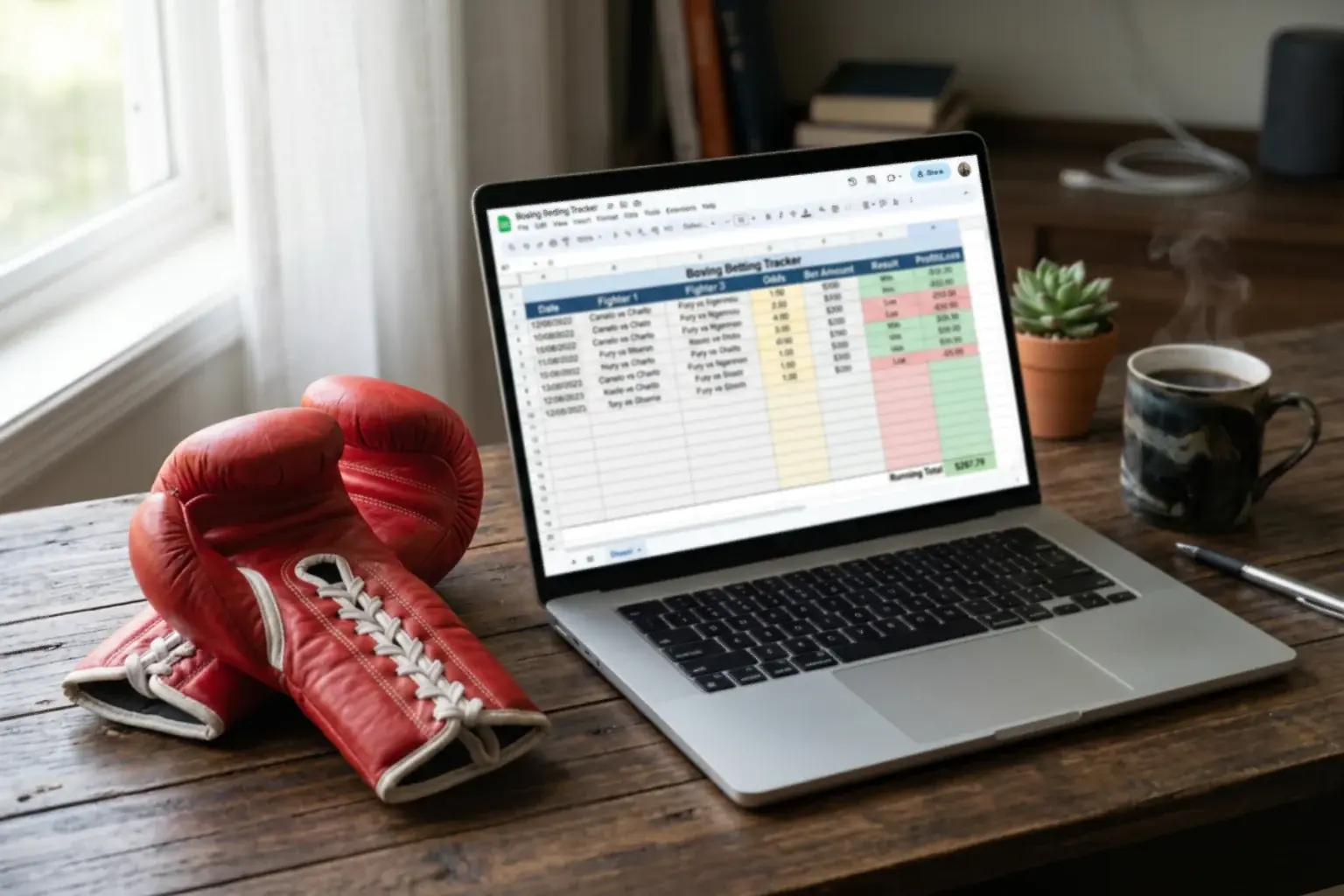
Start small. Apply these principles to one card before committing serious money. Track everything — bets, reasoning, outcomes. A truly profitable approach requires discipline, which is why tracking your boxing betting records is essential for long-term success. Review your results quarterly and identify leaks. Adjust. Boxing rewards patience, and so does betting on it.
Your edge will not emerge overnight. It builds through repetition, honest self-assessment, and relentless curiosity about why fights unfold the way they do. Put in that work and the results follow. Elevate your wagering game by following the daily insights provided by BoxBetUK. Skip it and the bookmaker thanks you for your contribution.
How do you find value bets in boxing?
Compare your probability estimate to the implied probability from the odds. If you believe a fighter has a 25% chance and the odds imply only 15%, that is value. Build estimates using style analysis, recent form, and contextual factors like layoffs or weight moves.
What statistics matter most for boxing betting?
Knockout percentage filtered by opposition quality, punch accuracy, and rounds fought in recent bouts all inform predictions. However, statistics should supplement watching actual fights rather than replace it.
Should you bet on every fight or be selective?
Selectivity wins. Most cards feature only one or two genuinely valuable betting opportunities. Forcing action on thin edges erodes bankroll through accumulated margins. Quality over quantity.
How much of your bankroll should you risk per bet?
Standard guidance suggests 1% to 3% per wager. Confident plays might warrant up to 5% in exceptional circumstances. Never exceed 5% regardless of conviction — upsets happen constantly.
Created by the ”box bet” editorial team.