Method of Victory Boxing Bets: KO, TKO and Decision Probabilities
 Available in US
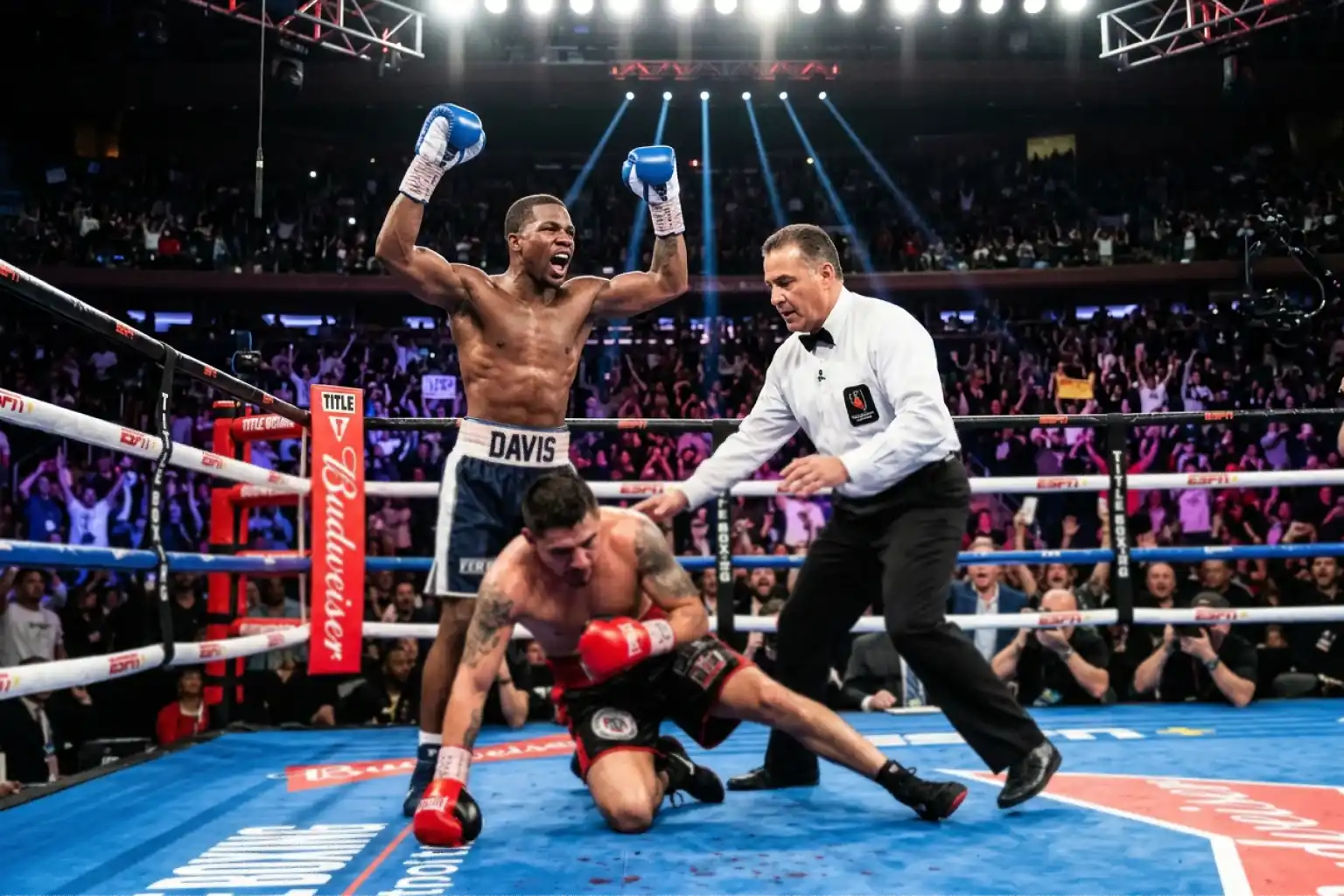
The moment that changed how I approach method of victory betting came during a Gervonta Davis fight. Everyone knew Tank was going to win. The moneyline was prohibitive, somewhere around one-to-eight. But the method of victory markets told a different story entirely, and I made more profit from correctly predicting the stoppage timing than I would have from backing the obvious winner at those compressed odds.
Method of victory betting represents one of the most analytically rewarding markets in boxing. When you strip away the noise and focus purely on how a fight will end, you enter a domain where research genuinely pays dividends. Davis currently leads all active champions with a staggering 90.3 percent knockout rate. Naoya Inoue follows closely at 90 percent. These are not random statistics – they are roadmaps to profitable betting if you know how to read them.
The beauty of this market lies in its complexity. You are not simply picking a winner; you are predicting the nature of victory. This additional layer of specificity allows the informed bettor to find value that has been squeezed out of the simpler moneyline. When bookmakers price method of victory, they must account for multiple outcomes simultaneously, and that complexity creates inefficiencies.
Method of Victory Categories: Analyzing KO and TKO Odds
I spent an embarrassing amount of time early in my betting career confusing KO and TKO settlements. The distinction matters enormously for your betting slips, and understanding exactly what qualifies for each category will save you from unpleasant surprises.
A knockout in the pure sense occurs when a fighter is rendered unable to continue by a single blow or combination, typically falling to the canvas and failing to beat the referee’s count. The image most people conjure – a fighter flat on their back, looking at the lights – represents the classic knockout. For betting purposes, this clean finish usually settles under the KO category, though some bookmakers combine KO and TKO into a single outcome.
The technical knockout encompasses a broader range of stoppages. Corner retirements between rounds fall here. Referee stoppages when a fighter can no longer intelligently defend themselves qualify as TKOs. A doctor waving off a bout due to cuts or swelling results in a technical knockout. The fighter might be standing, might even be protesting the stoppage, but the result is TKO nonetheless.
Decision Outcomes and Their Variations
When twelve rounds pass without a stoppage, the judges’ scorecards determine the winner. A unanimous decision means all three judges scored the fight for the same boxer. A split decision indicates two judges favoured one fighter while the third scored it for his opponent. A majority decision sees two judges picking the winner while the third has it scored even.
For betting purposes, most bookmakers group all decision types together. You are betting on the fight going the full distance and being determined by scorecards, regardless of whether the decision is unanimous or split. Some specialty markets do break these down further, offering enhanced odds on specific decision types, but these carry significantly more variance and require deep knowledge of the judges assigned to the bout.
Disqualification represents a rare but real outcome. Headbutts causing cuts that prevent continuation, excessive low blows after warnings, or other egregious fouls can result in DQ. Some bookmakers treat disqualification as a separate settlement category while others void bets or include it under TKO. Always check the specific rules before placing method of victory wagers.
Calculating Implied Probability for Each Method
Billy Bird’s astonishing record of 139 knockouts across 356 professional fights represents the extreme end of stopping power, but it illustrates how fighter history translates into probability. When I assess method of victory markets, I start by calculating what the odds imply about each outcome’s likelihood, then compare those implied probabilities against my own estimates.
The formula is straightforward. Take the decimal odds for each method, calculate the implied probability for each, then add them together. The total will exceed 100 percent – that excess represents the bookmaker’s margin. For example, if KO/TKO is priced at 1.80 and Decision at 2.20, the implied probabilities are 55.6 percent and 45.5 percent respectively, totalling 101.1 percent. The 1.1 percent represents the overround.
Understanding this mathematics helps you identify value. If your analysis suggests a fighter has a 60 percent chance of stopping their opponent but the market implies only 52 percent, you have found positive expected value. The challenge lies in developing accurate probability estimates, which requires honest assessment of both fighters’ styles and histories.
I maintain a simple database tracking stoppage rates by division and fighter style. Punchers stop opponents at different rates than slick boxers. Heavyweights finish fights earlier than welterweights on average. These baseline rates inform my method of victory assessments before I layer in fight-specific factors.
Fighter Style to Method of Victory Framework
The matchup determines everything in method of victory betting. Two pressure fighters trading inside will produce different outcomes than two rangy counterpunchers keeping distance. I have developed a simple framework that helps predict likely methods based on the stylistic confrontation.
When a puncher faces a boxer, the fight bifurcates into two likely outcomes: either the puncher lands something significant and scores a stoppage, or the boxer’s movement and defence carry him to a points victory. The middle ground – a decision for the puncher or a late stoppage for the boxer – occurs less frequently. This bifurcation creates interesting betting angles, particularly when the market underprices one outcome because public perception leans too heavily toward the other.
Two punchers meeting tends to produce stoppages. The full breakdown of boxing markets covers this dynamic in greater depth, but the key insight is that neither fighter possesses the defensive craft to survive extended exchanges. These matchups favour early-round KO/TKO bets, though the specific fighter producing the stoppage becomes harder to predict.
Pure boxer versus pure boxer matchups skew heavily toward decisions. Both fighters possess the ring IQ to avoid sustained damage, and neither carries the power to force matters. When you identify these technically oriented matchups, the decision market often offers value because casual bettors find the idea of twelve tactical rounds less exciting than knockouts and therefore bet accordingly.
The Davis example from my introduction illustrates how elite power translates across styles. Tank adapts to opponents – he boxes when necessary, applies pressure when openings appear – but his knockout percentage remains consistently high because he carries fight-ending power regardless of the tactical approach he employs. Against such fighters, the stoppage represents the probability baseline rather than the exception.
Does a TKO count the same as a KO for betting purposes?
This depends on your bookmaker and the specific market. Many bookmakers combine KO and TKO into a single ‘KO/TKO’ outcome. Others separate them, meaning a TKO stoppage would lose if you specifically bet on KO. Always check the settlement rules before placing your wager, particularly for prop bets where the distinction matters.
What happens if a fight ends in a technical draw?
Technical draws occur when a fight is stopped early due to accidental foul and has not progressed past a certain point, usually four rounds. Most bookmakers void method of victory bets in technical draw scenarios since no winner is declared. Your stake would typically be returned, though specific rules vary between operators.
Where Analysis Meets Execution
Method of victory betting rewards preparation more than any other boxing market. The analytical framework I have outlined here – understanding categories, calculating implied probabilities, assessing stylistic matchups – provides the foundation for finding genuine value.
My best method of victory bets have come from identifying fighter tendencies that the market has underweighted. A pressure fighter coming off a decision victory might drift in the stoppage markets because recent memory favours the points outcome. But if his previous six fights ended early and the decision was an aberration, the original pattern likely reasserts itself. The market often exhibits recency bias that patient bettors can exploit.
Trust your analysis when it contradicts market sentiment. If you have done the work – studied the styles, calculated the probabilities, identified the value – execute your bet with confidence. Method of victory markets reward conviction backed by research, and that combination describes profitable betting in any discipline.
Prepared by the box bet editorial staff.